


XGSA_FD can be used for advanced electromagnetic interference and fields analysis of aboveground and underground systems in the frequency domain from DC to about 100 MHz and is commonly used for the evaluation of interference between power lines or cables and pipelines or telecommunication systems. This module can also calculate the electromagnetic force on conductors.
XGSA_FD contains GSA_FD and can be used also for advanced grounding systems analysis.
XGSA_FD includes the tools SRA and SA for soil resistivity analysis, soil resistivity seasonal analysis and multilayer soil modelling.
XGSA_FD is highly appreciated for its power and accuracy and for the wide field of application.

GSA_FD can be used for advanced analysis of underground systems in the frequency domain from DC to about 100 MHz and is commonly used for medium and large systems size like substations, photovoltaic plants or wind plants, for cathodic protection and anode bed analysis or for calculations at high frequency.
GSA_FD can be used also for advanced electromagnetic interference analysis of underground systems in the frequency domain from DC to about 100 MHz and is commonly used for the evaluation of interference between power cables and pipelines.
GSA_FD includes the tools SRA and SA for soil resistivity analysis, soil resistivity seasonal analysis and multilayer soil modelling.
GSA_FD is highly appreciated for its power and accuracy and is irreplaceable where the hypothesis of equipotential condition of the electrode is not acceptable.

GSA can be used for analysis of underground systems at low frequency and is commonly used for small and medium size plants like substations.
GSA includes the tools SRA and SA for soil resistivity analysis, soil resistivity seasonal analysis and multilayer soil modelling.
GSA is highly appreciated for its ease of use, user interface and quality of graphic output.
{tab GENERAL DESCRIPTION|title-active=GENERAL DESCRIPTION}
GSA is based on a PEEC static numerical model and to the equipotential condition of the electrodes and can analyse the low frequency performance of grounding systems composed by many distinct electrodes of any shape but with a limited size into a uniform or multilayer soil model.
GSA can take input data in the form of either graphical (from “dxf” files or from the integrated CAD) or numerical and render powerful graphical facilities via it’s optimised and validated computation algorithms, thus making it an indispensable tool for grounding system design and verification.
GSA includes the modules SRA to calculate multilayer soil model parameters starting from measured soil resistivity data and SA to calculate the effects of seasonal climate change.
GSA is essentially a low frequency tool but in several practical cases (with little electrodes), it can be also useful to calculate the impulse impedance of electrodes under lighting currents with an accuracy level adequate for many engineering applications.
{tab INPUT DATA|title-active=INPUT DATA}
- Electrical data (e.g. single phase to earth fault current, data for calculation of earthing current, reference standard, intervention time of protections, eventually additional resistance between feet and ground surface, etc.)
- Geometrical data (e.g. grounding system layout of all electrodes (up to 999), conductors cross section, coating thickness, material properties etc.). Each electrode consists in a network of arbitrarily connected (or separated) conductors
- Physical data (e.g. soil resistivity or apparent resistivity measured values, superficial thin layer characteristics, etc.)
{tab OUTPUT RESULTS|title-active=OUTPUT RESULTS}
- Decrement factor (Df) as per IEEE standard
- Split factor (r) as per EN standard or (Sf) as per IEEE standard
- Earthing current
- Minimum cross section of grounding system conductors for thermal specification
- Uniform or multilayer soil model parameters from on site measurements values of apparent resistivity with Wenner or Schlumberger methods
- Reduction factor of touch and step voltages due to a superficial thin layer (Cs) as per IEEE standard
- Maximum permissible touch and step voltages as per EN and IEEE standards. With European standard it is also possible to calculate the permissible touch voltage without presence of human body, taking into account the body resistance (Rb 50%) and possibly additional resistance between feet and ground surface
- Ground resistance and Ground Potential Rise values of all electrodes
- Distribution of leakage current from the electrodes with 1D, 2D and 3D graphical representation to verify the contribution and the efficiency of grounding system portions
- Maximum electric field value close to the electrodes (useful to quickly check if the soil ionization phenomenon can occur)
- Soil surface potentials and touch and step voltages distributions on superficial straight line or rectangular area by 2D and 3D coloured graphic representations, for individuation of safe and hazardous areas
- List of material used for grounding system (wires and rods)
- Orthographic projections or isometric representations of grounding system
{tab MAIN FEATURES|title-active=MAIN FEATURES}
- Calculation model based on PEEC method in static conditions
- Possibility to consider International (IEC/TS 60479-1:2018), European (EN 50522:2022) and American (IEEE Std 80-2013) standards
- Possibility to import grid layout from “dxf” files
- Automatic debug of data before calculation
- Analysis of grounding systems of any shape, with choice of the total number of elementary sources
- Possibility to analyse up to 999 distinct electrodes on the same calculation, including for instance return electrodes, transmission line grounding systems or floating potential underground electrodes
- Possibility to energize electrodes using both current injections or impressed potentials
- Characterization of soil with a uniform or multilayer model. Beyond this a superficial thin layer can be added
- Possibility to analyse electrodes partially insulated or encased in concrete or buried in treated soil to lower resistivity
- Libraries with typical properties of soil, soils covering, concrete and backfill materials
- Possibility to export layout data and results in .dxf file
- Possibility to export graphic outputs to other WINDOWS® applications
- Possibility to choose the language (English, German. French, Italian, Spanish, Portuguese)
{/tabs}
Gallery
{gallery}sint/gsa/01{/gallery}
gs: Grounding and Earthing Analysis, Grounding Systems, Earth Resistance, Touch and step voltages, Soil modeling, Lightning protection, Soil ionization, impulse impedance
2-3 December 2019
XGSLab Seminar in Frankfurt
We are proud to announce we completed the first XGSLab seminar, an international event with the participation of people from 10 different Countries. We thanks again all participants also for the warm feedback we received. This seminar will give us new motivations and ideas for the future. Thanks again.
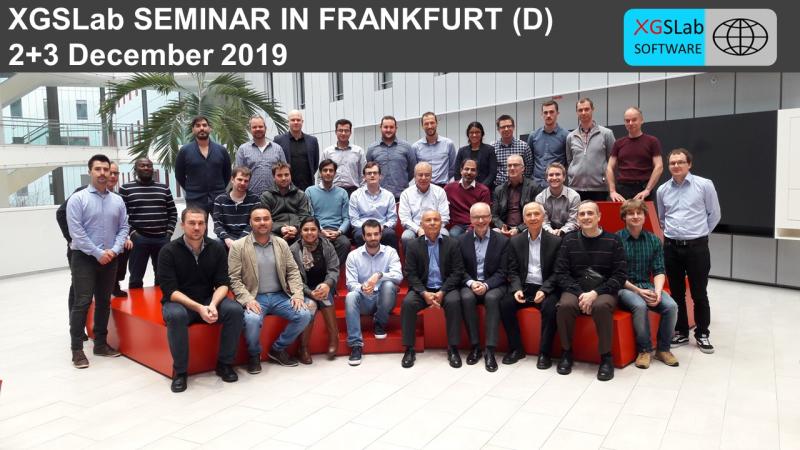
Download Seminar - Projects and slides
21 June 2019
XGSLab has reached a new milestone
We tested the module XGSA_TD with fast transients implicate in failures in gas insulated substations (GIS).
As known, these transients can have a rise time 10 ns and the significant components of the frequency spectrum can reach frequencies as high as 60 MHz.
We extended the application limit of the XGSA_TD module to 100 MHz.
The results we obtained are in good agreement with results in literature.
13 June 2019
2019 Grounding & Lightning CEATI Conference
We will participate together with our partner EasyPower LLC to the “2019 Grounding & Lightning CEATI Conference”.
Last year we participated to the CEATI Conference in Anaheim (CA) and we met consultants, manufacturers, and representatives from electric utilities in particular from the US and Canada.
This year we want to confirm our interest in the North American market.
12 February 2019
Data export to EMTP
We are pleased to announce the module XGSA_TD now includes an option to export frequency dependent self and mutual impedances to EMTP®. This option allows to simulate with a rigorous model the dynamic behavior of large grounding systems during electromagnetic transients. Another step forward.
28 November 2018
XGSLab advances
We are we are about to reach the end of the year and we want to give you some advances for 2019.
2018 was an exceptional year for XGSLab, a year that we close with over 50 new customers worldwide.
We want to thank all our customers for the trust and enthusiasm they are sending us, a great way to start 2019.
We will close 2018 with the new XGSLab 9.0.1 release.
The new release will include the new NETS module.
NETS has been extensively tested and validated and is now almost ready to enter the market.
All other modules have also been improved thanks to valuable information from customers.
The greater the number of customers, the better will be XGSLab. We invite all customers to continue to be part of the XGSLab community and to provide suggestions for improving the program.
For our part, we will try to give a precise identity to this community and to respond to customers' needs with the correct priorities.
28 May 2018
XGSLab new module NETS
We are working on a new module:
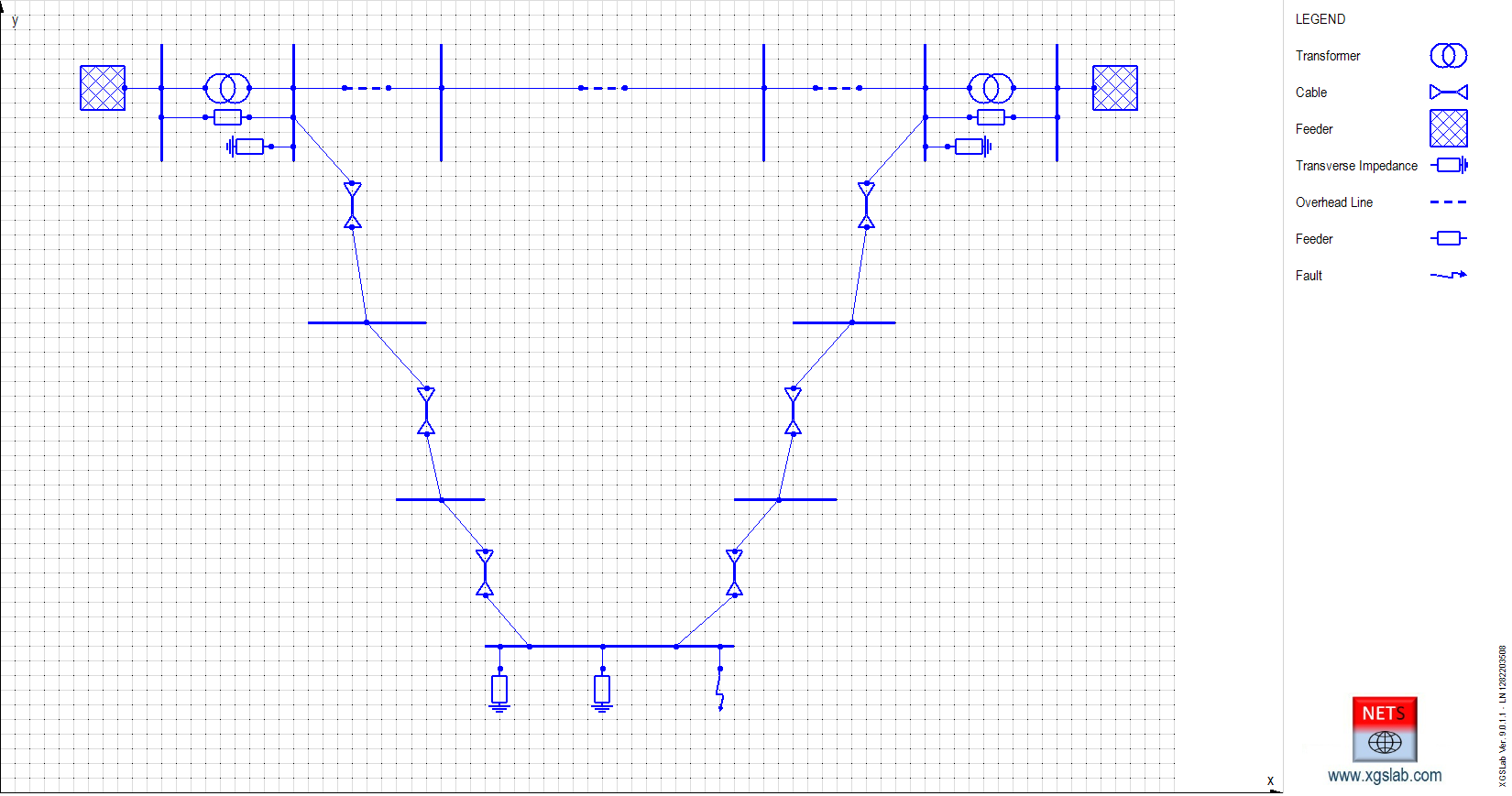
NETS is a very flexible tool to solve full meshed multiconductors networks and is based on the n-phases system representation.
This approach is general and overcome the classic method of symmetrical components and can be used to represents power systems as multiconductors networks enabling the consideration of asymmetrical systems also in presence of grounding circuits or circuits with a different phases number.
The network components (generators, lines, cables, transformers, loads ..) are represented with n-ports cells and the connection between cells is obtained by means of n-ports buses.
NETS can be used to solve networks in steady state or fault conditions and to calculate voltages and currents or short circuit currents (three phase, phase to phase, phase to phase to earth, single phase to earth) with or without fault impedances.
In particular, NETS can be used for the calculation of the fault current distribution.
NETS is then a very useful tools to calculate data input for others XGSLab modules (for instance the split factor or the current to earth) and represents the link between XGSLab and the commercial software for power systems analysis.
8 January 2018
XGSLab internal CAD
New XGSLab release includes a very useful internal CAD.
Now, is possible load a “dxf” file and also create a new layout using the internal tool “Draw”.
The “Draw” option opens a window where the User can directly draw in both 2D and 3D mode.
This tool allows the use of the keyboard buttons adopted by the main diffused CAD tools.
The tool “Draw” allows to draw lines (also using “ortho” option), circles, arcs … and allows a complete interactivity.
The tool “Draw” allows to create new layout or modify imported layout in a very easy way.
Results can now be exported in “dxf” format using the command “Export”.
7 December 2017
XGSLab Low Frequency Breakdown Free
As known, due to the decoupling between the electric field and magnetic field, there is a low-frequency breakdown problem in the formulation of tools based on PEEC methods as XGSLab.
The frequency breakdown occurs because the contribution of the vector potential is swamped by that of the scalar potential at low frequencies. In other words, at low frequencies, PEEC methods become ill conditioned.
The problem is limited to cases where part of conductors are above and part below the soil surface or similar conditions but is anyway a tedious problem.
In last version, XGSLab algorithms have been improved and now XGSLab is low-frequency breakdown free. Another new great improvement in the XGSLab software.
24 July 2017
XGSLab Multilayer has arrived
After months of research and development, XGSLab multilayer has arrived.
New XGSLab version includes a very powerful algorithm able to consider a multilayer soil model with an arbitrary layers number in a very rigorous way (without constrains on layer thickness).
Multilayer soil model is available in the version “Enterprise”.
Moreover XGSLab includes many other improvements, in particular a new tool “draw” useful to create models directly inside XGSLab without external CAD.
21 February 2017
XGSLab Time Domain Animation
The new module XGSA_TD is coming. This new powerful module will allows the same XGSA_FD calculations in the Time Domain.
Results will be displayed in many ways and also with animation.
The following video shows the earth surface potential and touch and step voltages evolution in the time domain related to a transient current injected in a grounding system.
The same results are vailable for both electric and magnetic fields.
More news will be published soon.
12 Jannuary 2017
XGSLab Multilayer is coming
XGSLab Multilayer is coming. We are working to the new multilayer module.
In a few time a new soil analyzer will be ready. Next we will implement the multilayer soil model alghoritm in the calculation routines.
This new features will allows to improve the calculation precision in all cases where a double layer soil model is not sufficient.
More news will be published soon.
28 November 2018
XGSLab advances
We are we are about to reach the end of the year and we want to give you some advances for 2019.
2018 was an exceptional year for XGSLab, a year that we close with over 50 new customers worldwide.
We want to thank all our customers for the trust and enthusiasm they are sending us, a great way to start 2019.
We will close 2018 with the new XGSLab 9.0.1 release.
The new release will include the new NETS module.
NETS has been extensively tested and validated and is now almost ready to enter the market.
All other modules have also been improved thanks to valuable information from customers.
The greater the number of customers, the better will be XGSLab.
We invite all customers to continue to be part of the XGSLab community and to provide suggestions for improving the program.
For our part, we will try to give a precise identity to this community and to respond to customers' needs with the correct priorities.
15 April 2025
XGSLab Release 2025.1.1
- Multi area with TVS-MF-EF
- Strip areas with TSV
- Layer-wise fragmentation of conductors
- Import table with sources energization
- Safe areas with Shield Module
- Batch libraries export to savable zip file
- dwg import of cad blocks of entities to background
- dwg import of Spline entities
- Minor bugs fixed

26 June 2024
XGSLab Release 2024.1.1
- Completely new graphical interface based on vector graphics:
- Real and performing CAD included in the software
- No limit in handling the layout both about zooming and about rotating
- Coloured maps and contours all included in the same view and selectable by properly enabling layers
- dwg format added to the importable formats
- importation of 3D CAD entities such as polylines 2D and 3D
- importation of complex 3D geometries for background (solids and meshes included)
- Z coordinate oriented upward in GSA, GSA_FD, XGSA_FD and SHIELD
- New scheduler features able to take data from projects to be run
- Ability to analyse the transients of multiple elements in the same graph in TD
- Minor bugs fixed

28 June 2023
XGSLab Release 10.3.1
- Electromagnetic forces and effects
- Spark gap SPDs available for XGSA_FD
- Management of conductors continuity to infinite as a conductor property
- Dedicated tools for manual input of:
- Injected currents
- External electromotive force
- Longitudinal and transverse impedances
- Continuity to infinite of conductors
- Reference points (already existing)
- New Harmonic Impedance graphical output in XGSA_TD
- New “On tag” parameter in Scheduler
- Minor bugs fixed

12 December 2022
XGSLab Release 10.2.1
- New XglCAD for vectorial graphic input in BETA version
- Calculations with a virtually unlimited number of victim or source elements are now possible. The main limit is now given by the hardware capabilities.
- Scheduling of projects considering the setting of parameters like:
- Tags to switch-off, frequency, fault location
- Distribution pictures to be generated
- Area calculations to be run
- Line calculations to be run
- Metal to metal Voltage now available for XGSA_FD using the distribution "Potential Difference"
- In Soil Resistivity Analyser available also the Geometric average in addition to the arithmetic
- New standard EN 50522-2022 has been implemented
- Minor bugs fixed

11 May 2022
XGSLab Release 10.1.1
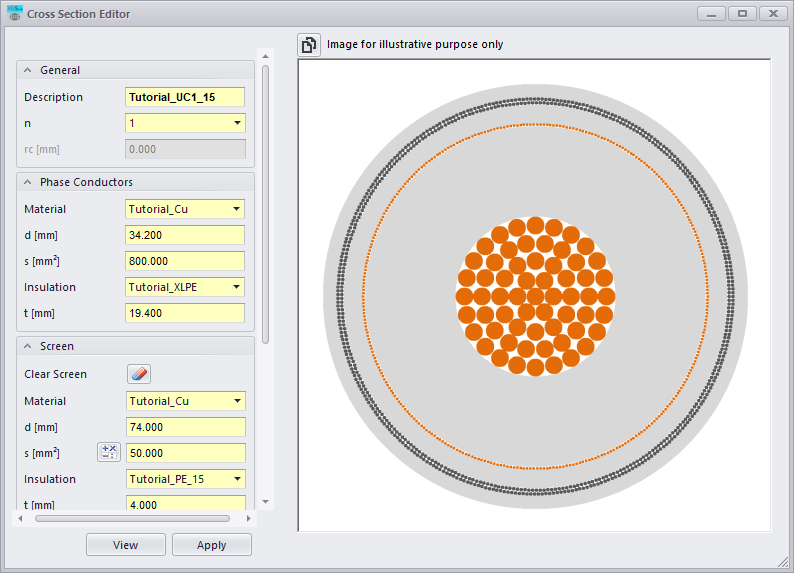
- Screened conductors implemented in GSA_FD, XGSA_FD and XGSA_TD modules
- Multi core cable in NETS
- Conductors, Lines, Cables and Screened Conductors graphical editors are now available
- Parameters allowed in projects added to scheduling (Beta)
- XGL viewer improved in several features
- Minimum length of lines to be imported now can be set
- Improved calculation speed in multiple scenarios
- Minor bugs fixed
13 September 2021
XGSLab Release 10.0.1
- New module SHIELD for calculation of the volume protected by an LPS using EGM. Methods available:
- Rolling Sphere
- Eriksson
- Improved calculation precision by including the third Sommerfeld integrals dW/dx
- Fourier Analyser: arbitrary time samples can now be imported from a list without the need to know the corresponding equation
- New model NETS Hybrid able to consider cables, lines and conductors like pipelines in the same cell
- New features that allow to calculate magnetic and electric fields also below the soil surface
- Availability of customized level also for touch and step voltages, magnetic field and electric field
- Multi Zone Soil Model: new tool to place zone land mark graphically
- Seasonal Analyser: diffusivity can now be calculated using the depth of frost soil
- Implemented the chance to set the reference name at its creation
- Merge of the reference options “all references” and “single reference” in order to enable the user to select a customized list of references among the available ones
- XGL CAD:
- New Cad 3d for Shield Module
- XglViewer Improvements
- Minor bugs fixed

15 February 2021
XGSLab Release 9.6.1
- New 3D Viewer implementation based on OpenGL, only for results. (x64 versions)
- New way to set conductors properties using libraries
- No more conductor segmentation into mesh sides
- Three windings transformers can now be considered in NETS
- Very long overhead lines can be computed in NETS
- Mutual impedances can now be set in Sources, longitudinal and transverse impedances in NETS
- New drawing tools for GS modules:
- Draw rectangle
- Object snap on conductors intersections
- Object snap on elements ends
- Shortcut from right-button menu to quickly set transverse impedance to simulate infinite conductor length
- Reach distance available also in GSA
- Minor bugs fixed
23 July 2020
XGSLab Release 9.5.1
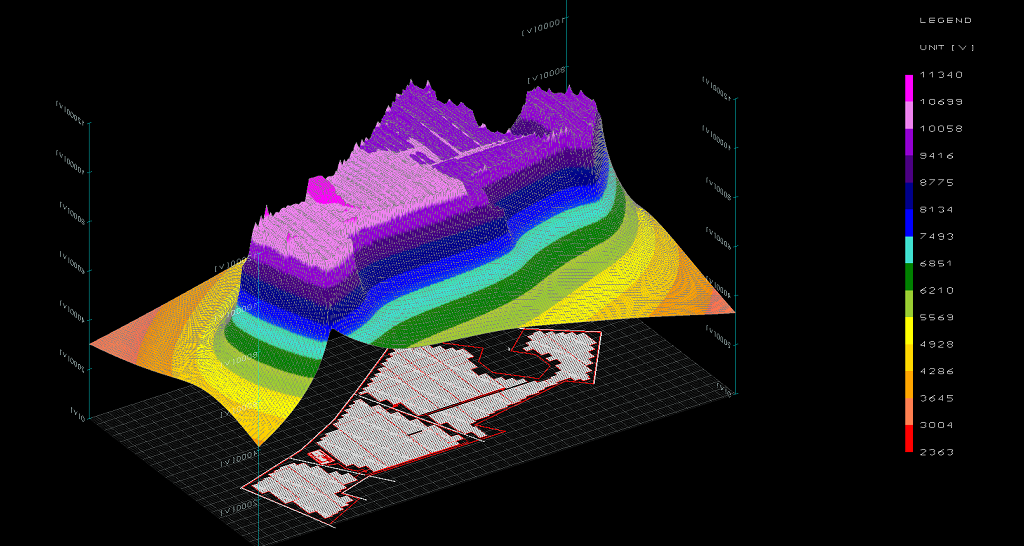
- Step voltage calculation is now possible from steps 0.25 m (0.82021 ft) long
- Dramatic improvement of performance in generating touch voltage plots with 'all elements' option active
- For each soil resistivity measurement is now possible to define a tag usable also to specify what is the traverse which that measurement belongs to
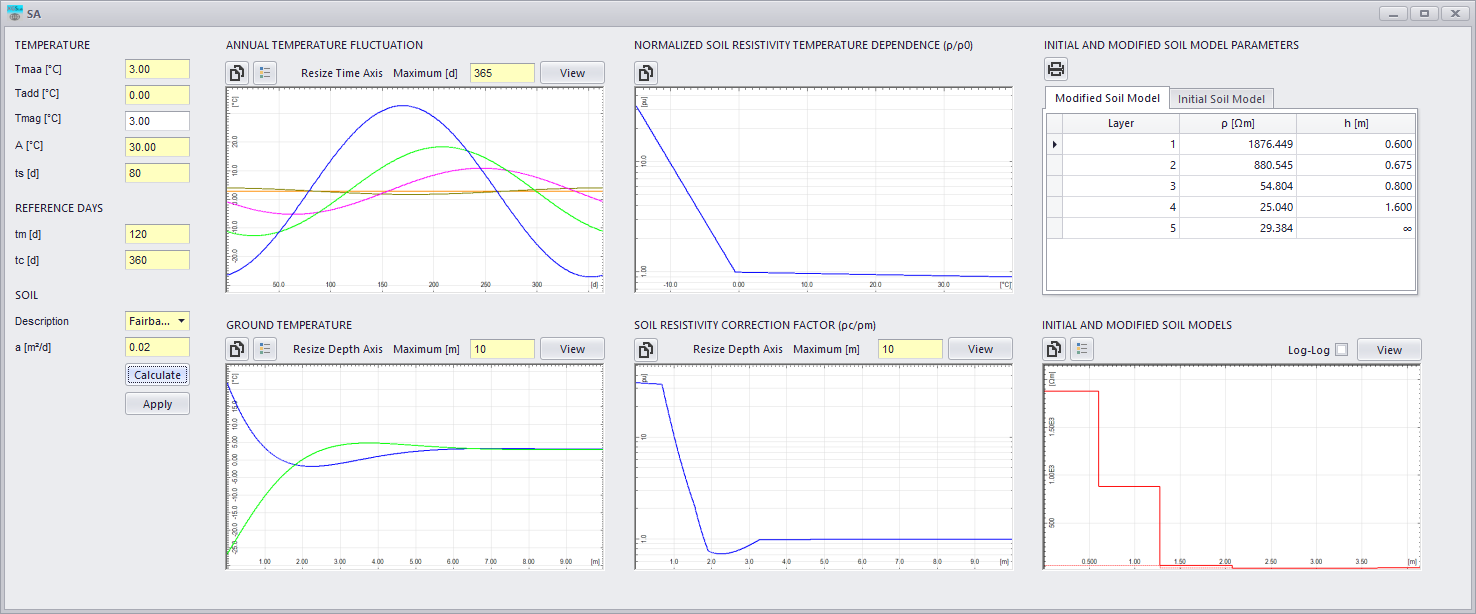
- Implement the new Seasonal Analysis that allows to consider the soil model variations depending on the temperature expected for a location
- Google Earth exportation for layout, 2D distributions, area calculation results for potential, magnetic field and electric field
- New CSV exportation option for each distribution picture (excepted in TD). Now it is possible to export exactly what is plotted in the software, sorted exactly like in the software plot for 1D picture. For 2D and 3D each element is exported like a record with centre point coordinates and related value
- 3D picture generation faster and with a double level of quality:
- Defaut quality = just a few seconds needed
- High quality = maximum a few tens of seconds needed
- New graphical features to edit the layout like:
- 'Reverse' that inverts the orientation of one or more conductors
- 'Scale' that scales one or more conductors keeping as reference a definable base point
- reference points graphical definition
- Rearrangement in connection options and features:
- New groupbox in the panel to handle them
- New handling of 'T' connections: the connection is detected if just the conductor touched in the middle is bare
- New option that allows to neglect all insulations in detecting the connections
- Introduced the possibility to set connections that can be just theoretical (and not represented physically)
- The word 'Span' is now replaced by the word 'Conductor' in the software terminology
- Minor Bugs fixed
12 March 2020
XGSLab Release 9.4.1
- Implemented a complete compatibility with Imperial Units!
- Improved earth potential area and line calculation performances. Reduction of time needed from 50% up to 80%!
- Many new graphical interaction features:
- Scroll in/out for 2D and 3D layout and for 2D and 3D distributions
- Pan using mouse scroll for 2D and 3D layout and for 2D and 3D distributions
- Zoom selected spans both from 2D and 3D layout and from list of spans
- List of spans now exportable and importable in xml format
- Last area and line calculation automatically saved in the folder of the project
- External impedances and inputs now visible also 1D distributions
- Minor bugs fixed
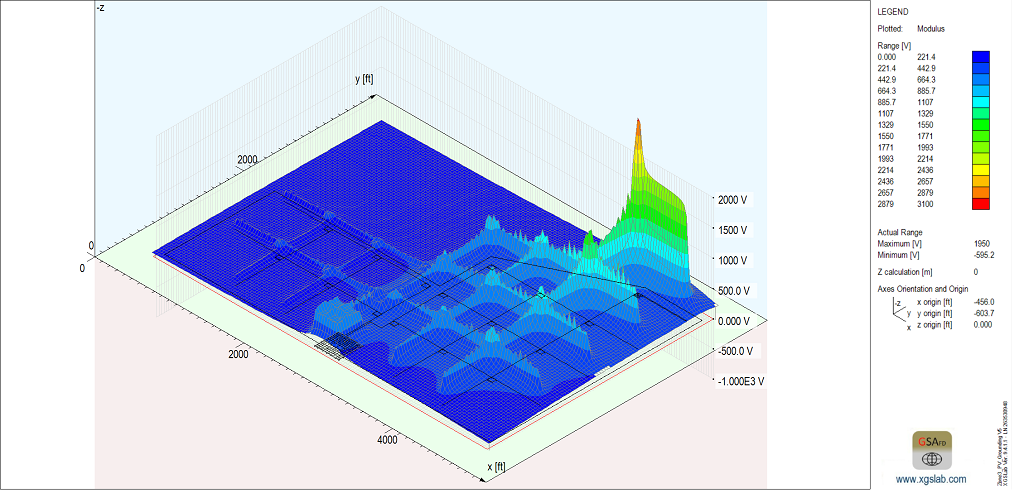
28 November 2019
XGSLab Release 9.3.1
- Improved reach touch voltage
- Argument plotting for normalized frequency spectrum in TD
- Imperial units considered for dxf importation
- New soil parameters frequency dependance model CIGRE TB 781
- More intuitive representation of area and line calculation
- Automatic layers number research
- Improved scheduler with the option to program the starting of the calculations
- Minor bugs fixed
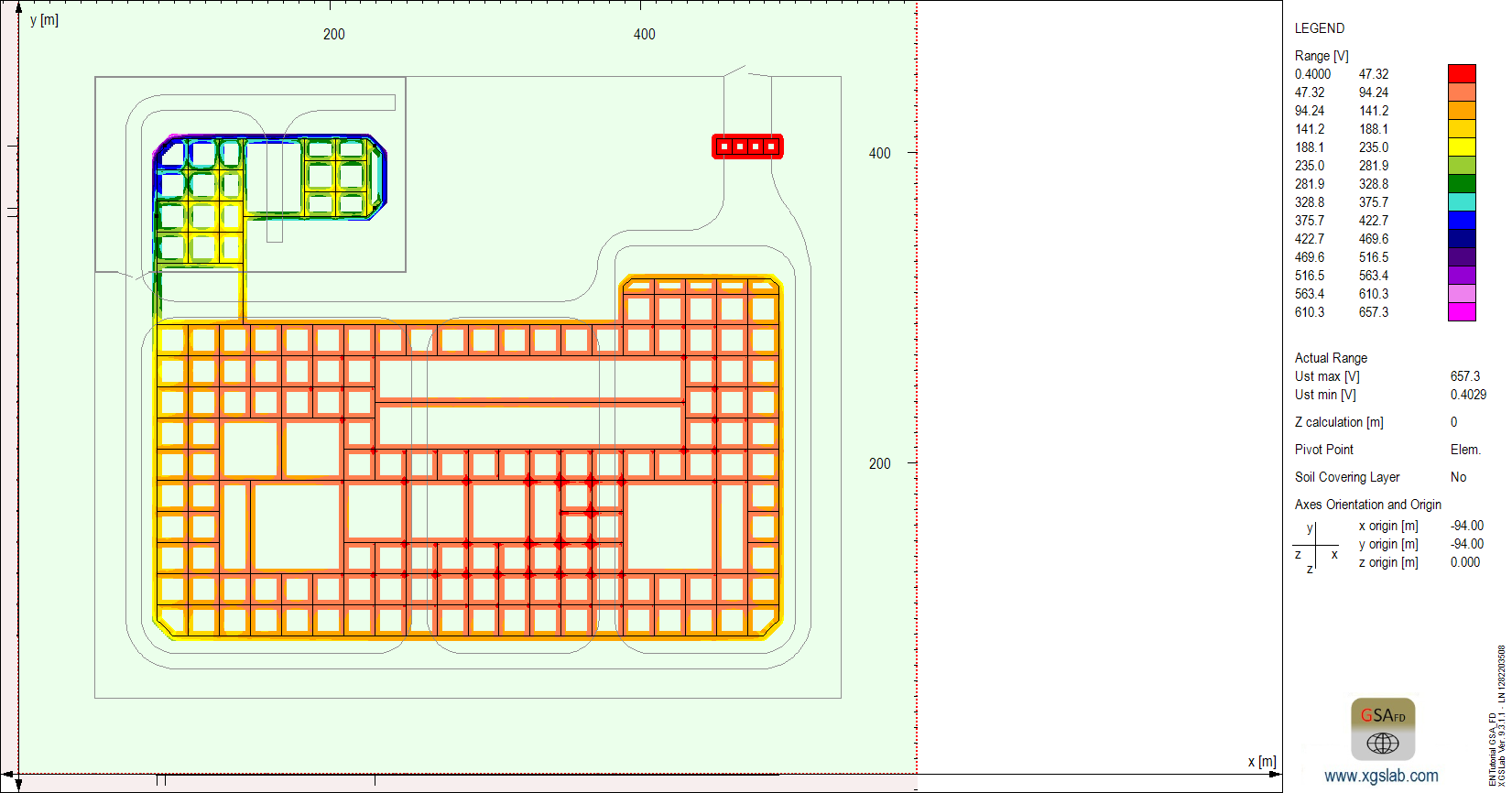
30 September 2019
XGSLab Release 9.2.1
- New tool for corona effect calculation for XGSA_FD
- Reach touch voltage option now available for option "All elements" in FD modules
- Custom levels for contour pictures introduced in the plot of earth surface potential in GSA, GSA_FD and XGSA_FD modules
- Enlarged the frequency range in which the validity of the software is granted up to 100 MHz in GSA_FD, XGSA_FD and XGSA_TD modules
- New distribution available: "Leakage Current on Small Holidays - Superficial" in GSA_FD and XGSA_FD modules
- New default colour scales available for a quick customization of results outfit
- Minor bugs fixed
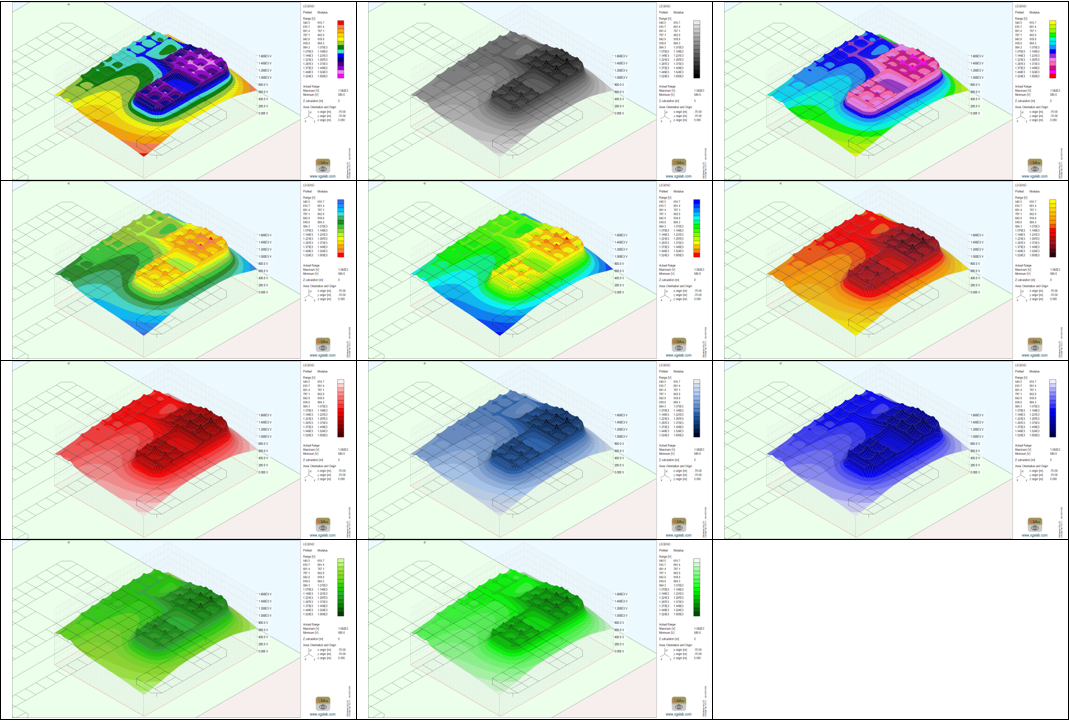
13 June 2019
XGSLab Release 9.1.1
- Improvement of NETS with Zig Zag Transformers, Pipe Type Cables and Connection Visualization
- Improvement of Automatic Report
- Introduced the possibility to divide spans into one single element also for FD and TD modules
- New control in debug able to find missing connections in one electrode for FD and TD modules
- New step by step analysis of debug in order to focus more easily the errors
- New algorithm for 1D distributions able sort the spans considering their position, orientation and connections
- Possibility to export frequency dependent impedances to EMTP®
- New IEC/TS 60479-1:2018 implemented
- New drawing tools like Array and Offset
- Improved doubtful connection reliability
- New levels of fragmentation introduced: “very high” and “very low”
- Improved graphical output for 3D pictures with steep gradients
- Minor bugs fixed
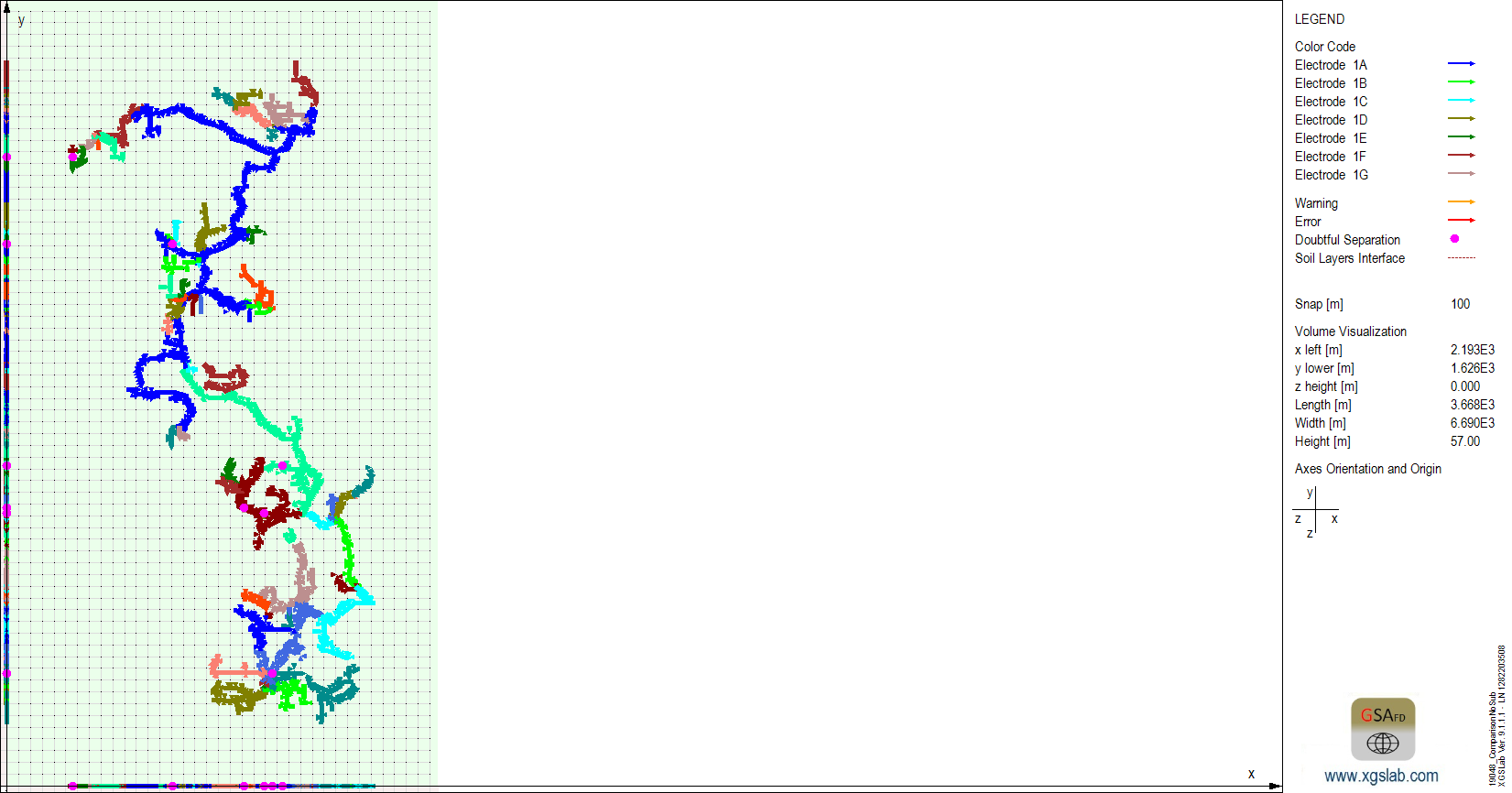
21 February 2019
XGSLab Release 9.0.1
- New module NETS! a solver for full meshed multi-conductor and multi-phase networks taking into account all the neutral conductors paths as well as the earth path. Based on Kirchhoff laws for multi-conductor and multi-phase systems
- Enhanced level of detail in post processing results: enabled the possibility to plot not only modulus but also real and imaginary part for scalar fields, real and imaginary part for each component for vector fields
- New drawing features like "move" and "copy"
- Introduced the possibility to interact with the background drawing it, keeping it as reference with object snap and deleting it graphically and/or from the dedicated table
- Minor bugs fixed
09 January 2019
XGSLab Release 8.3.2
- New scheduling feature that allows to run multiple calculations in series (>= Professional ver)
- New layout parameters arrangement: origin + length, width and depth
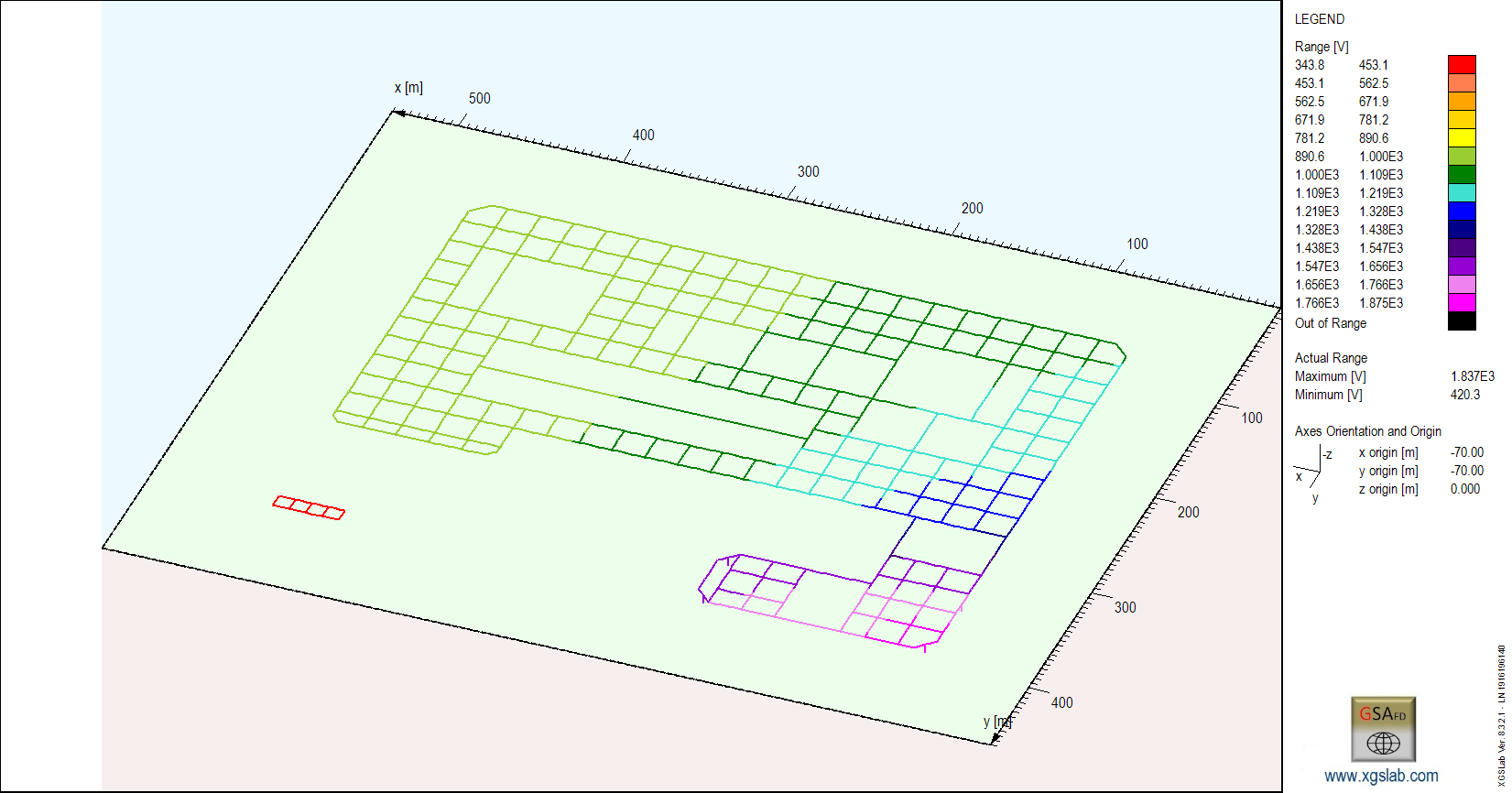
- New possibilty to export in dxf format contours obtained in area calculation
- New graphical options for graduation of axis
- New drawing options like "Rotation"
- New suggestion for element fragmentation
- Minor various improvements
- Minor bugs fixed
18 April 2018
XGSLab Release 8.3.1
- Enhanced calculation speed
- Improved calculation stability
- Improved calculation accuracy both with multilayer soil models and with soil multizone models
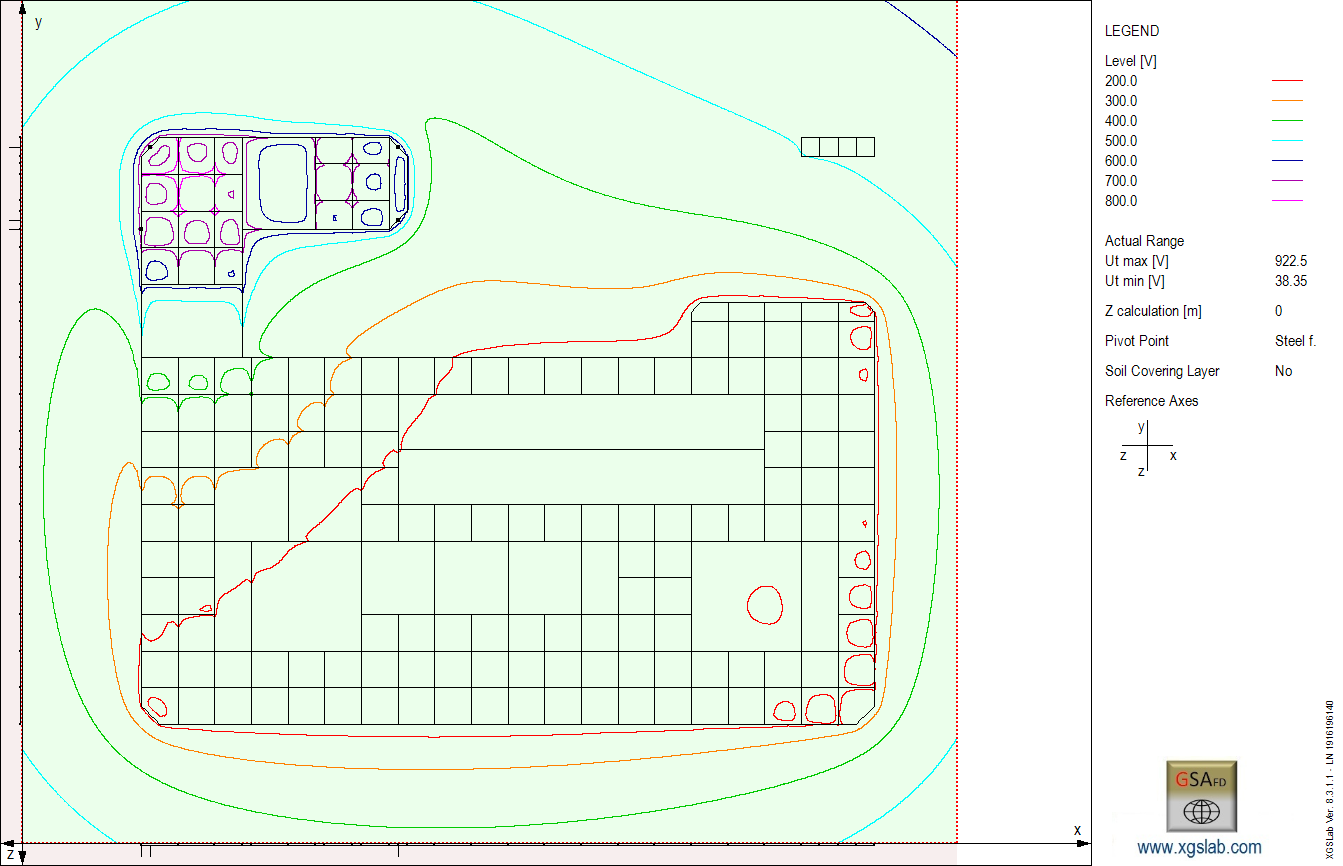
- New graphical output "contours"
- New graphical costumization by setting the number of levels in colours area graphical output
- Many new graphical options for touch and step voltages area calculation results
- New customizations options in impulse analyzer
- New possibility to save and load area and line calculations. This feature is very useful also to fully use and appreciate the new XGSLab Viewer
- Minor Bugs fixed
16 February 2018
XGSLab Release 8.2.1
- Calculation of potentials and touch and step voltages below the soil surface
- New energization mode for sources with uniform leakage current density
- Enhanced calculation stability also for projects with elements both below and above the soil surface
- Layout exportation tool added (dxf format)
- Possibility to apply a scale factor in order to simulate different levels of energization for the same scenario
- Many drawing tools and features added
- Tag filter for layout and for all elements option in Line and Area Calculations
- Improved soil analyzer
- Minor bugs fixed
11 November 2017
XGSLab Release 8.1.1
- IDE Improvements: like Project panel popups
- New standard management: more accurate, more complete
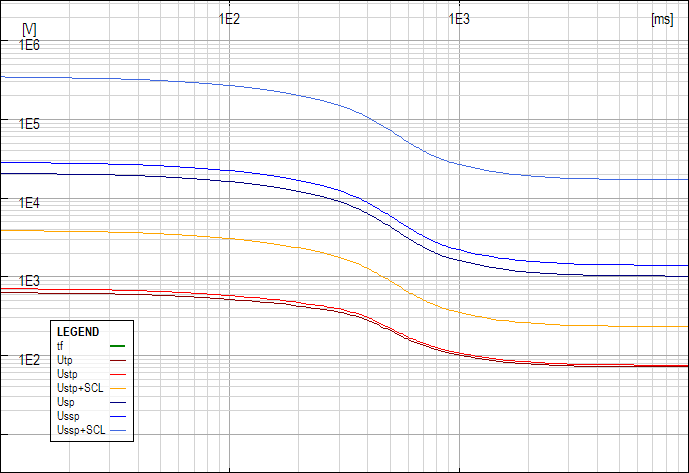
- IEC 60479-1:2005 considered in addition to EN 50522:2010 and to IEEE Std 80-2013
- Can work with a multilayer soil model with an arbitrary layers number
- More performing importation algorithm: about 15 times faster than the old one
- More performing drawing tools: Faster, More reliable, With new features like "array"
- More performing debug algorithm: Automatic fixing of most of superpositions, Automatic fixing of most of vertical short elements, Very precise detecting of doubtful separations
- More performing "All Elements" option in Safe Areas calculation: about 20 times faster than the old one
- Minor bugs fixed
24 July 2017
XGSLab Release 8.0.1
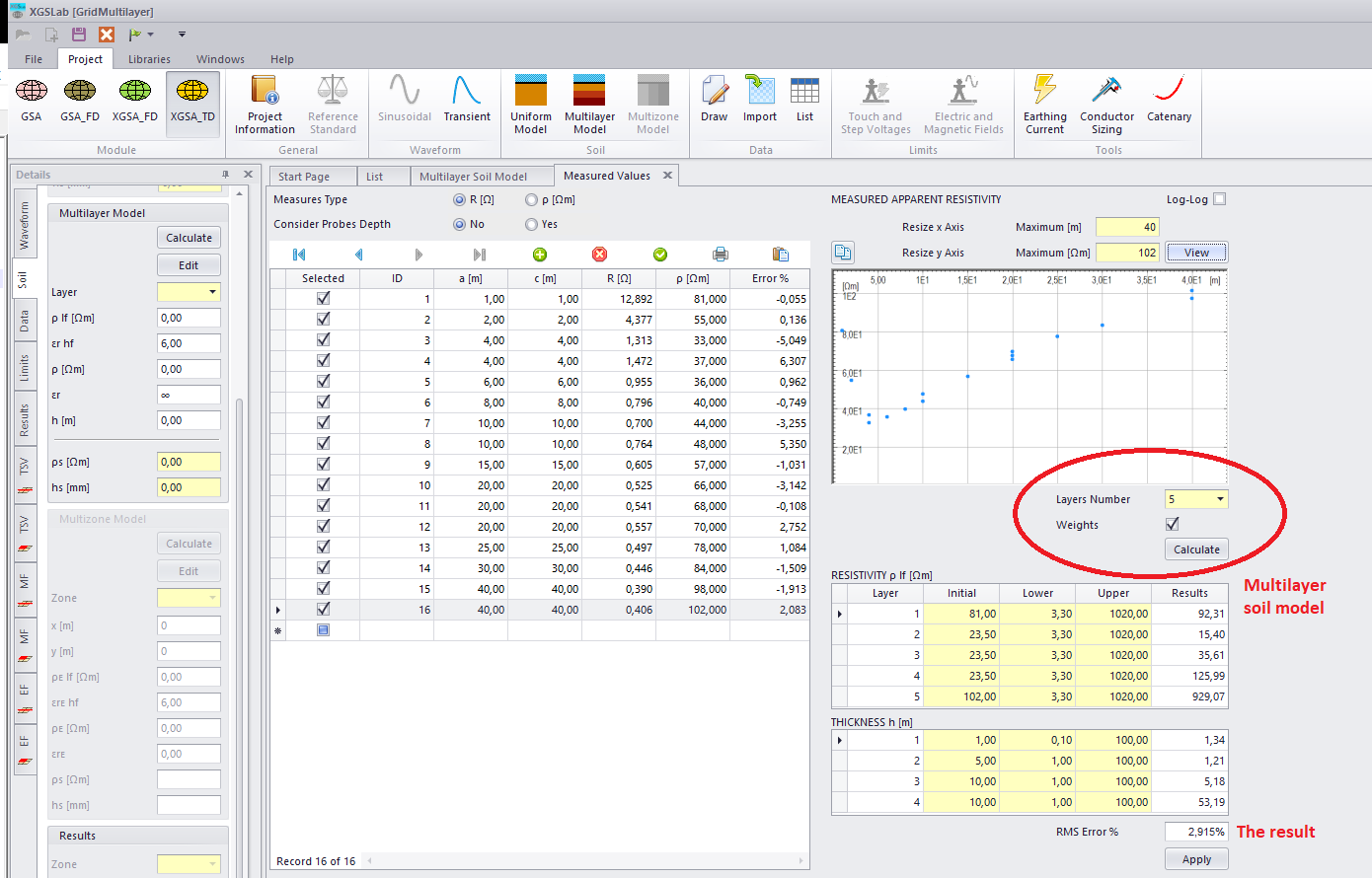
- New soil analyzer to calculate multilayer soil models considering Wenner and Schlumberger measures as input
- New calculation algorithm able to process multilayer soil models with arbitrary layers number
- New drawing tools that enables the User to draw directly in the software the layout in a very effective and quick way
- New layout management tools to improve the User’s experience
- Possibility to interact graphically both with active and inactive spans
- New graphical outfit of User’s interface
- Minor bugs fixed
14 March 2017
XGSLab Release 7.0.1
- TD module activated! Main Calculation and Line Calculation are available
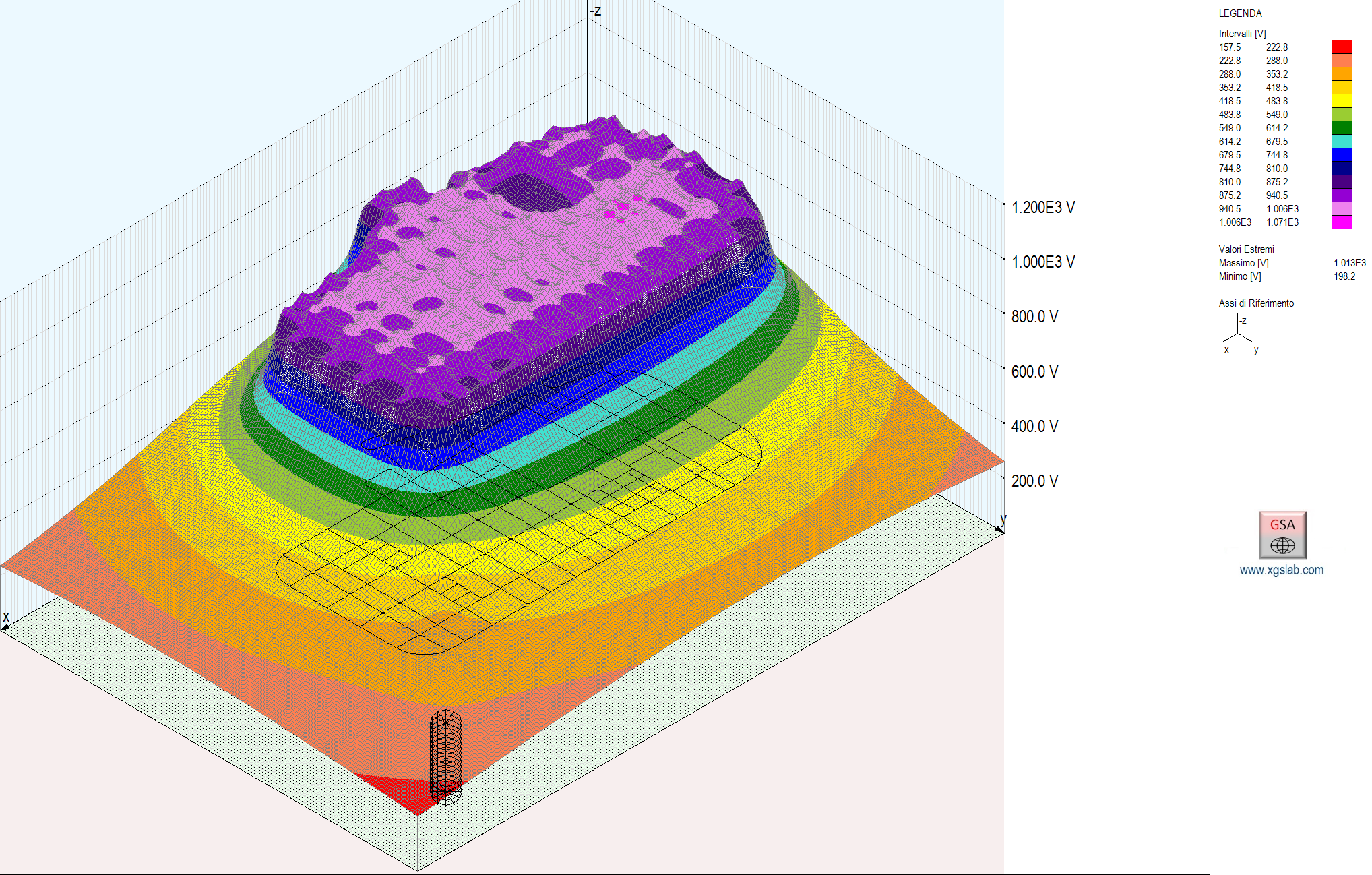
- New settings for z axis in 3D pictures
- Set elements tool improved in precision and effectiveness
- Possibility to input/read complex numbers both in Cartesian and in Polar coordinates
- Introduced “Color by” option: it allows the user to color the layout by using different parameters (everything the same, electrode, tag, material)
- Minor bugs fixed
21 December 2016
XGSLab Release 6.7.1
- Optimized RAM Consumption: using the 6.7.1 version it is possible to study the same project with a RAM consumption -20/30% than the previous versions.
- More refined calculation algorithm for High Frequencies.
- Improved management of German and Spanish languages.
- Introduced the possibility to store Area Calculations.
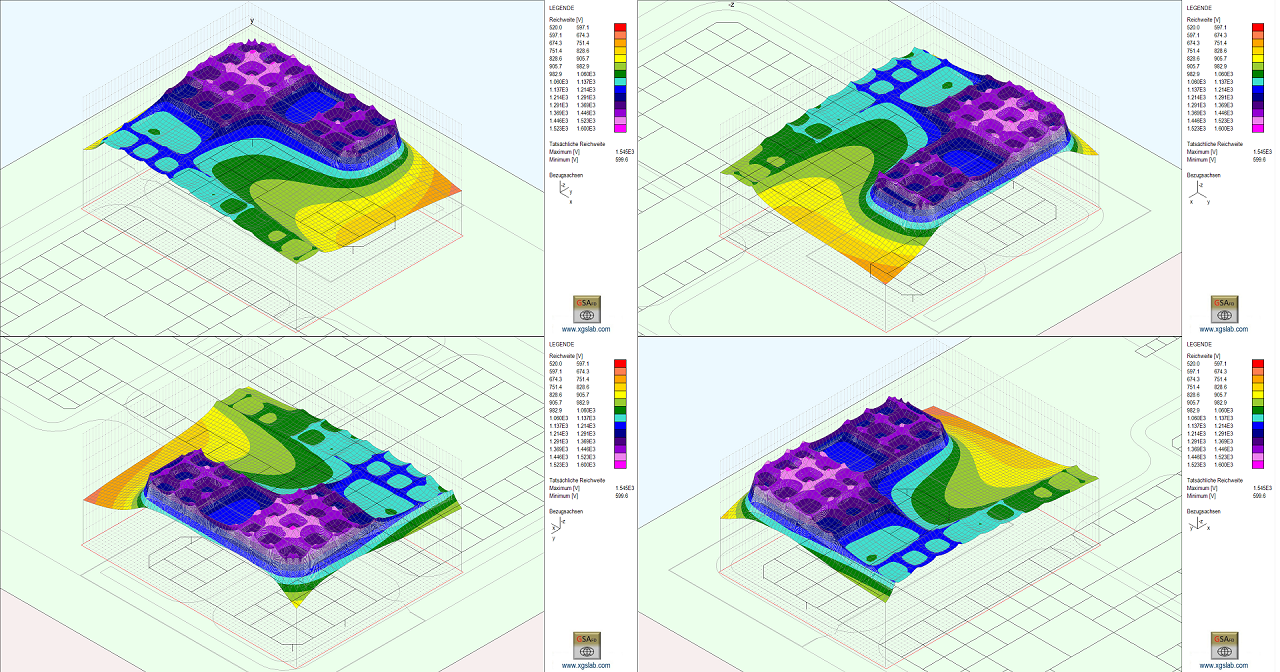
- New graphical tool that enables to rotate the 3D pictures of Area Calculation.
- Improved management of the legend: now perfectly readable at any resolution setting.
- Improved inverse-Fourier Transform algorithm and new graphical tools for TD module.
- Minor bugs fixed
18 October 2016
XGSLab Release 6.6.1
- New file project management. Single file instead of folders collection.
- New and easier importation procedure. Now the User has just to set the wanted total amount of elements and then import all the records set according to the dxf file in the Import window.
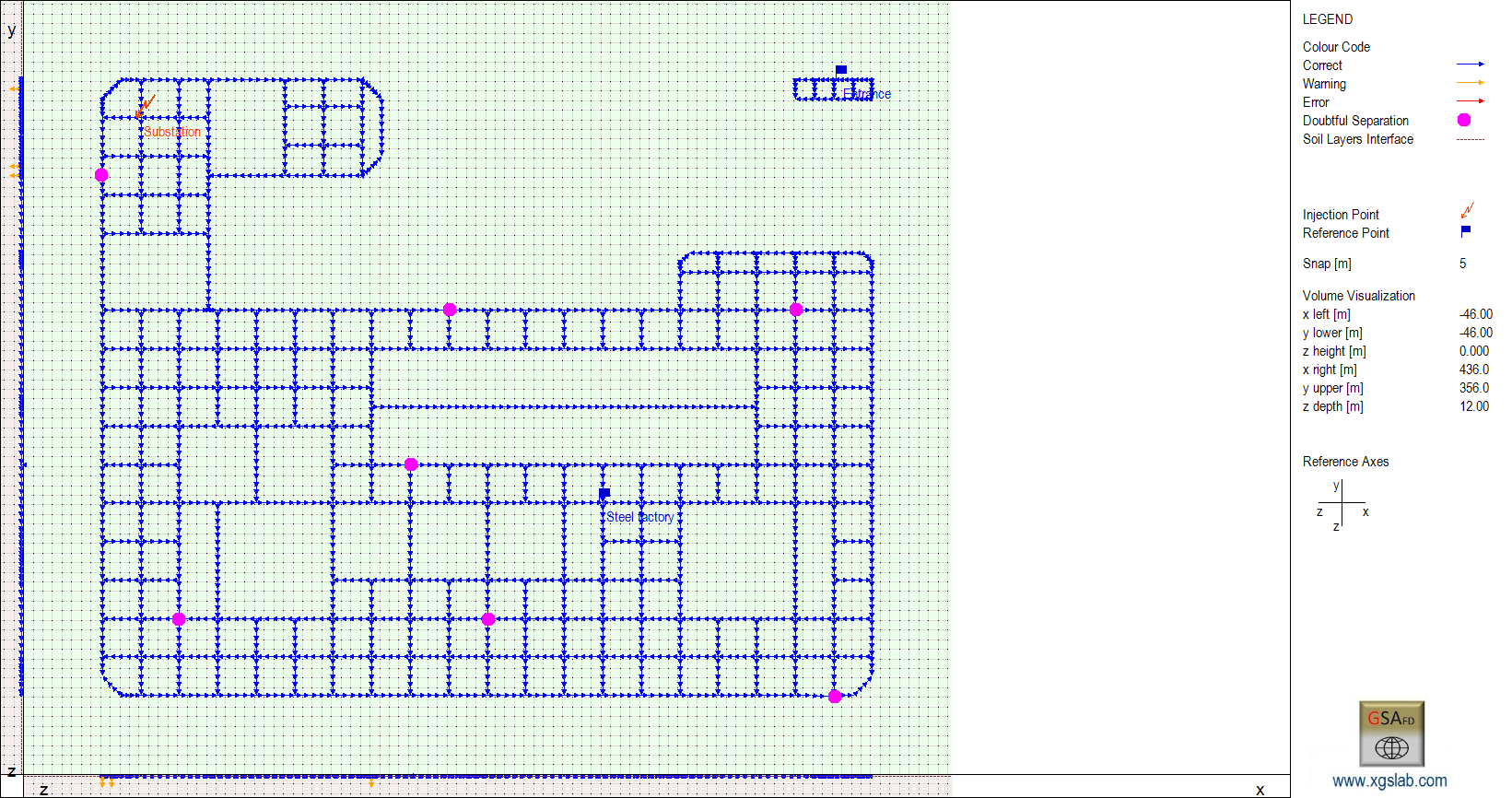
- New feature in debug pictures called “Doubtful Separation”: useful to easily detect possible lacking connections among victims (available in *_FD modules).
- Introduced a minimum value for Zt that must be > 0.1 mΩ and a maximum value for Zl that must be < 10 MΩ.
- Improved calculation accuracy
- Time Domain module developed and under test excepted post processing phases.
- Minor bugs fixed
29 June 2016
XGSLab Release 6.5.3
- Low Frequency breakdown: possibility to set a threshold below which no inductive coupling is considered. This makes the calculation more stable, expecially with very insulated elements.
- Improved graphical output.
- Possibility to swith off some text in layout pictures, in order to make them more readable.
- Enlarged limits of layout representation.
- Zone Indication in View 1D pictures.
- New warning message in case of controverstial source span.
- Some bugs fixed
30 May 2016
XGSLab Release 6.5.2
- Improved calculation performances with time saving up to 20%.
- Improved user experience with more responsive interaction with the software.
- More refined electromotive force calculation in multi zone.
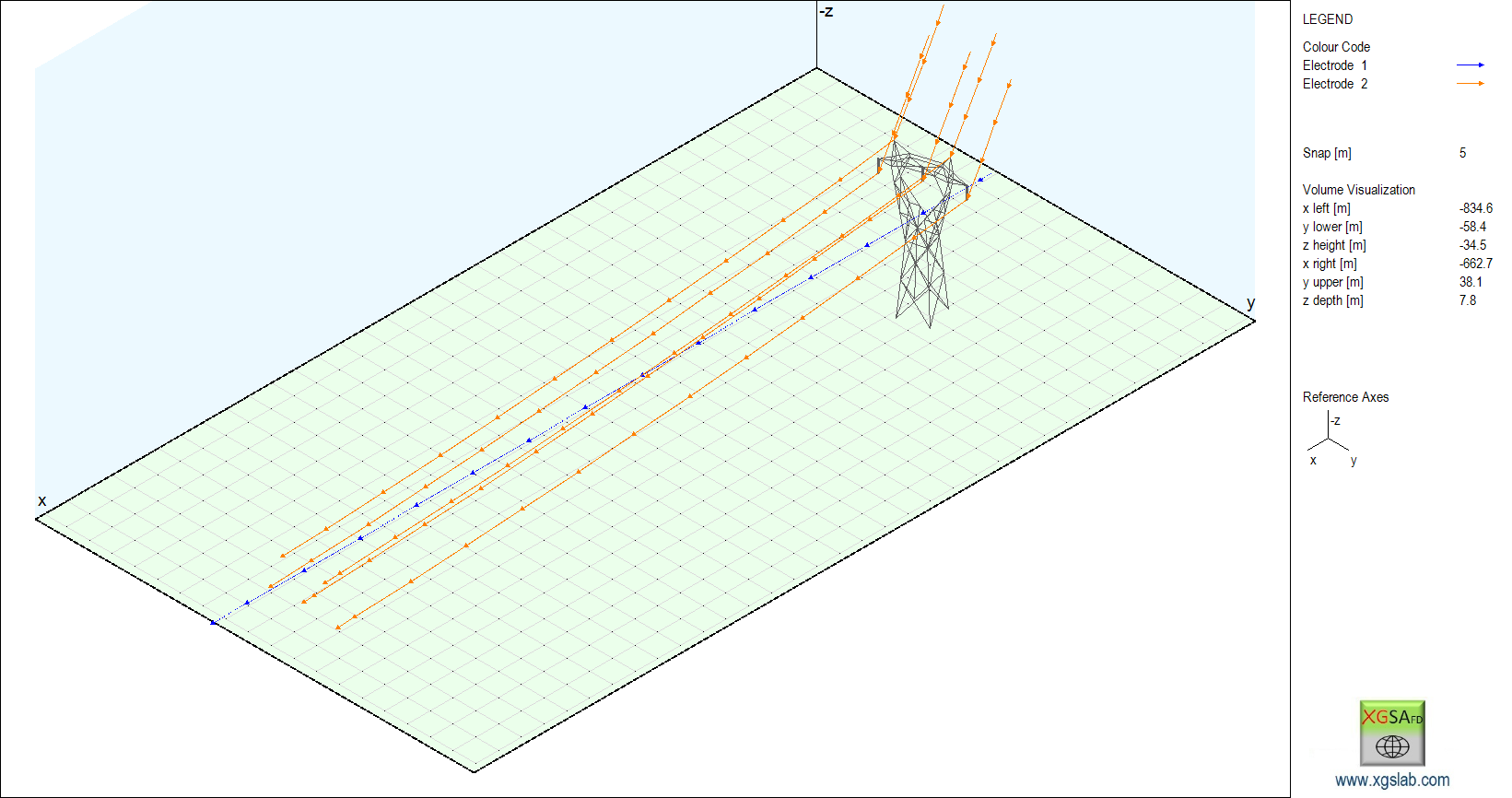
- New graphical representation of debug.
- New option “Orientation” in layout pictures in order to show the spans orientation.
- Enlarged layout limits.
- Some bugs fixed.
09 May 2016
XGSLab Release 6.5.1
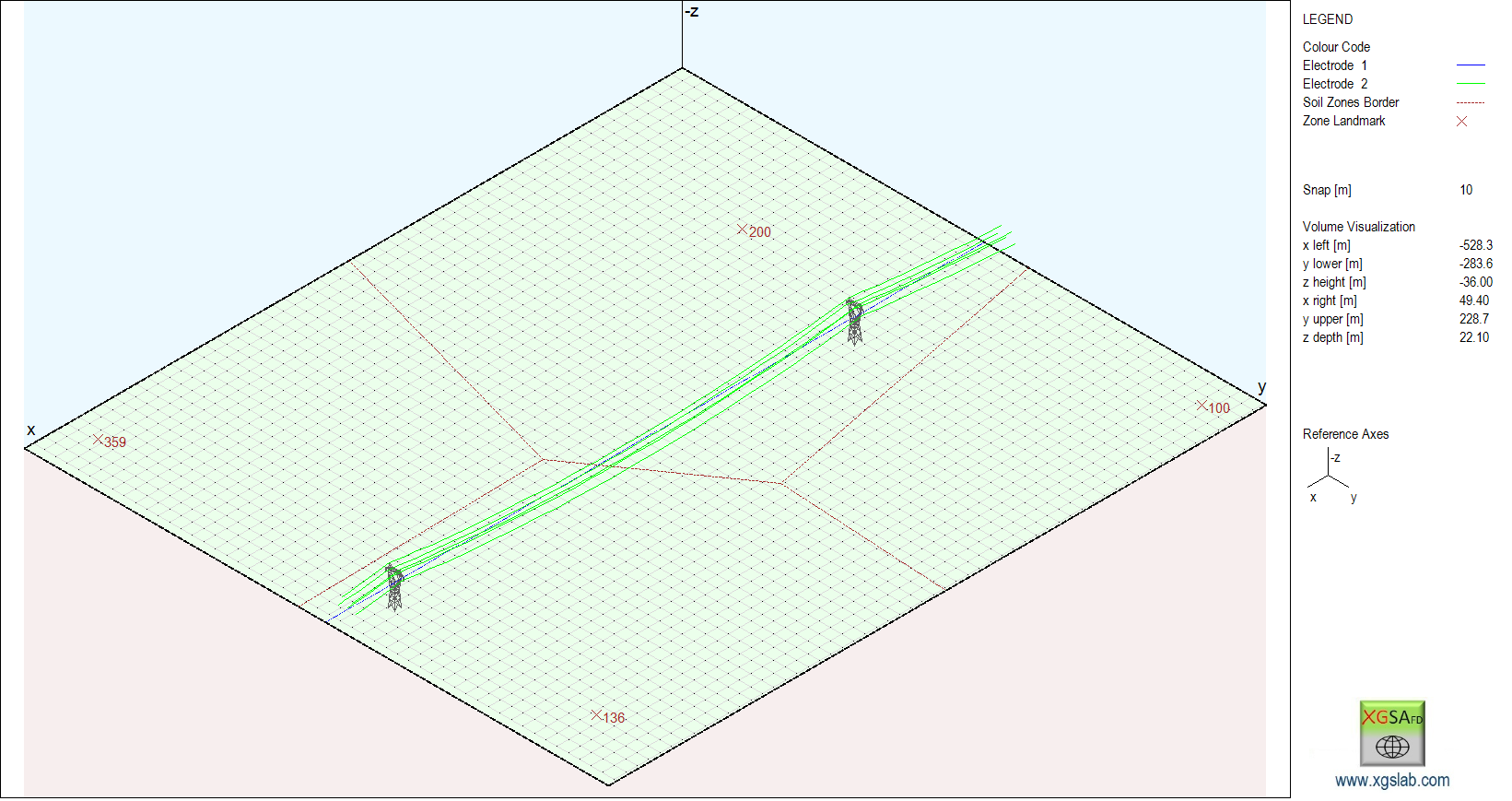
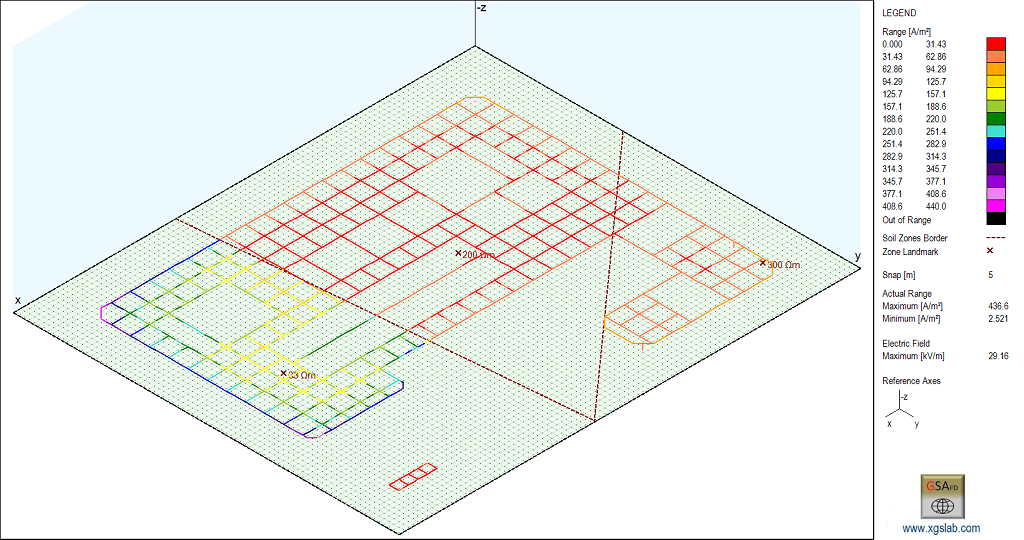
- Multizone soil Model! Now it is possible a further way to model the soil: instead of horizontal layers, different zones with different resistivities. This model can be particularly useful for wide grounding systems and for interference calculations.
- New table with all the values related to the additional impedances, both transverse and longitudinal.
- Improved graphic output and interaction.
- By reading span properties with a click on layout now it is possible to read also characteristic impedance and propagation constant.
- Improved tables graphic and interaction.
- Possibility to modify tag of spans without losing a possible available calculation.
- New distribution picture, showing the power losses along the conductors.
- Improved debug contronls on too short elemnts with a covering.
09 February 2016
XGSLab Release 6.4.2
- New soil data management considering the frequency dependance of the resistivity values
- Possibility to name the electrodes in GSA and the reference and injection points in GSA_FD and XGSA_FD
- New graphic interaction with 3D pictures:
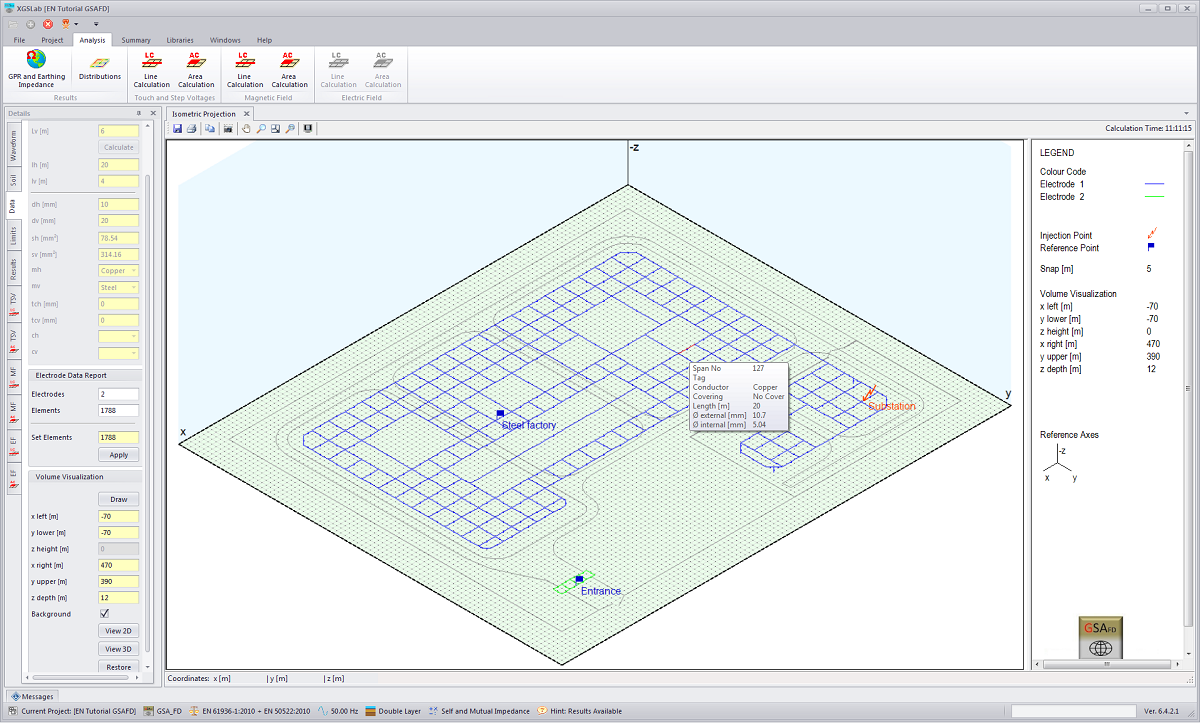
- In the layout activated the possibility to read properties and to edit spans
- In the distributions activated the possibility to read results values
- New graphic tool in 1D distribution: with a single click the values displayed by the cursor can be named with a label and pasted on the picture
- Improved graphic output for all distributions
- Improved debug speed
- Improved Line Calculation speed for Touch and Step Voltages thanks to multithreading implementation
- Improved management of External Electromotive Forces
- Minor bugs fixed
23 November 2015
XGSLab Release 6.4.1
- Enhanced performances: up to 20 times faster than the previous release.
- New automatic report, exportable in many formats like rtf, pdf, xls, html.
- New pictures management in a “Gallery” window.
- Rearrangement of main menu icons, in order to get better sequence in the step by step Data Input and in order to simplify the calculation options available.
- Improved graphical output with more readable numerical output.
- Many lattice tower CAD models available in Helpdesk area.
- Minor bugs fixed.
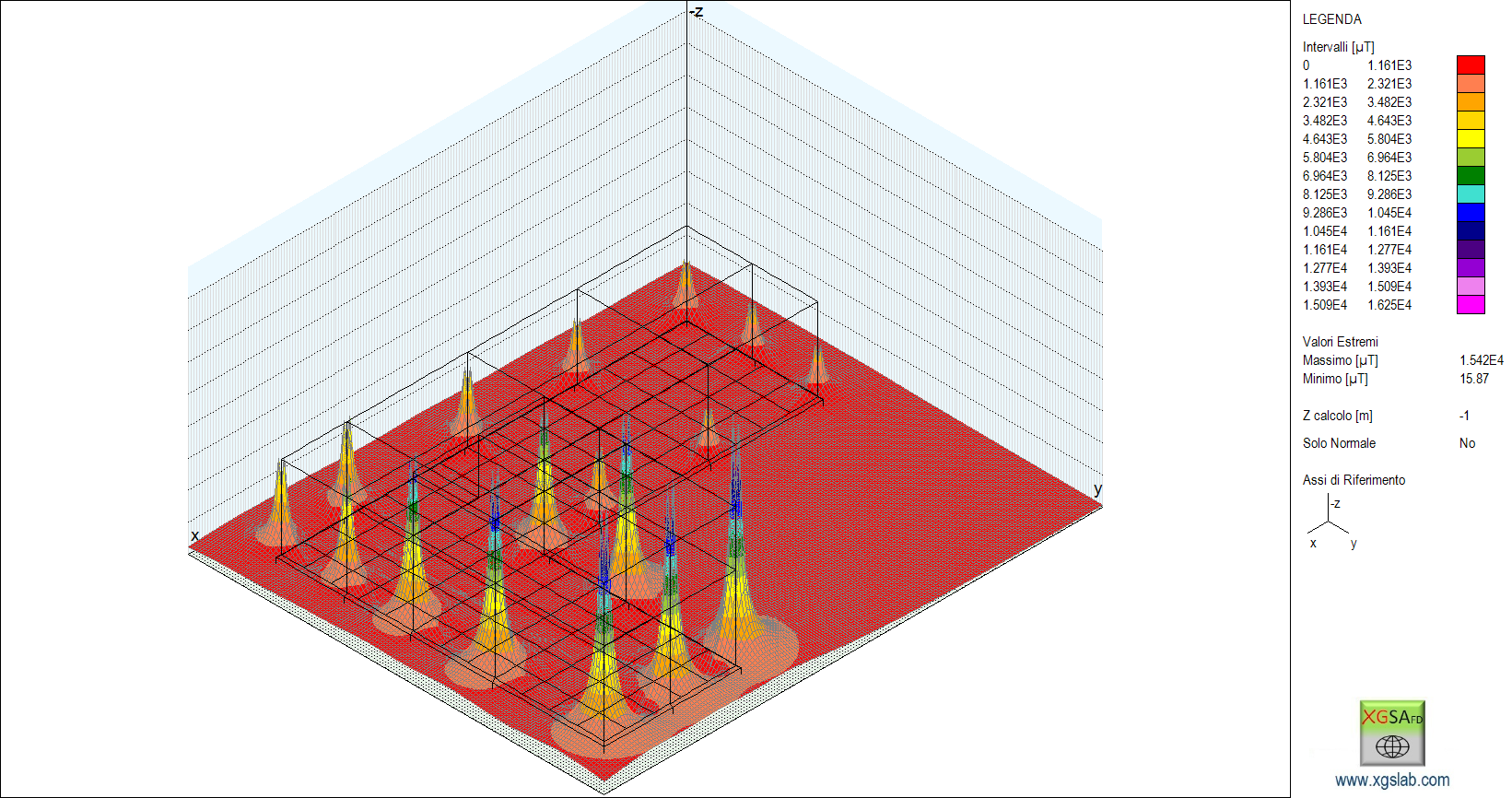
31 August 2015
XGSLab Release 6.3.1
- Enhanced validity limit in frequency domain up to a few MHz
- Improved Earthing Currents tool with the application of the calculated current
- Tooltip activated in 2D distributions pictures using right mouse button click on the “interesting” element
- Tooltip activated in 1D distributions pictures moving the mouse cursor over the picture
- Improved graphical outputs
- Minor bugs fixed
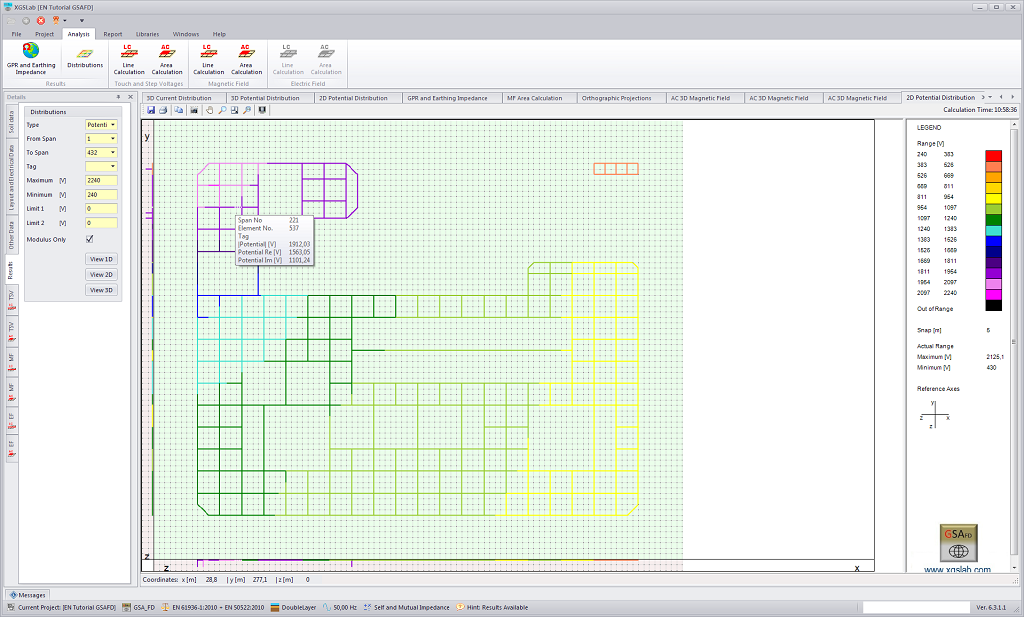
7 July 2015
XGSLab Release 6.2.2
- New graphic features for Line Calculation results to improve user’s interaction
- New graphic tool to trace a catenary using three measured points (XGSA_FD only)
- New tool to set the global number of elements
- New distribution picture “Covering Stress Voltage” aimed to investigate the voltage applied to a possible coating (GSA_FD and XGSA_FD only)
- Minor bugs fixed
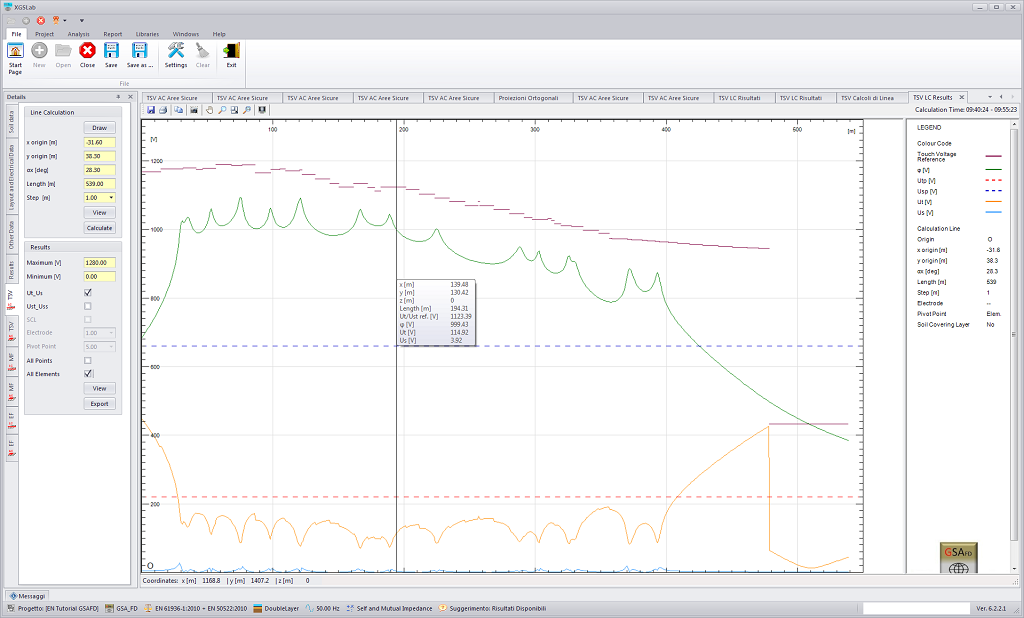
28 May 2015
XGSLab Release 6.2.1
- New tool to set Volume Visualization graphically
- New graphical look: more user friendly and more intuitive!
- Possibility to import also civil works as background
- Enhanced calculation speed for area calculations thanks to implementation of multithreading
- More flexibility in the choise of the standard
- Some minor bugs fixed
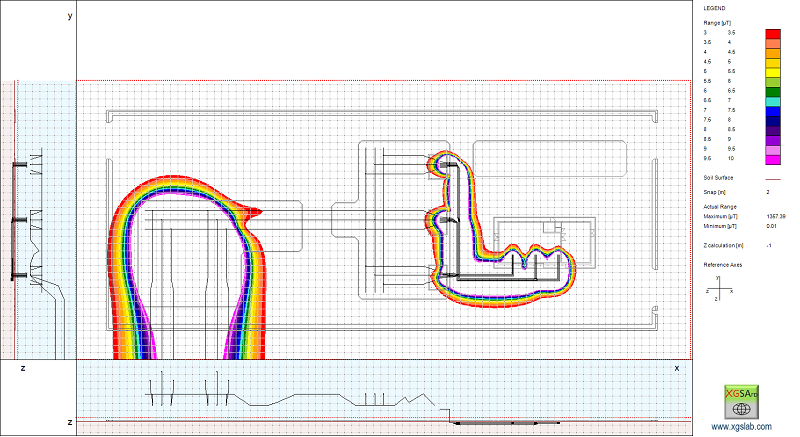
30 April 2015
XGSLab!
GSLab has been renamed in XGSLab, that means: Over and under Ground System Analysis ...
In this way, we approach a really new sperimental field.
09 April 2015
GSLab 6.1.2 Release
- Improved the dxf importation procedure
- More user friendly AGSA_FD layout
- Line calculation completely tilting for Magnetic field and Electric Field calculations
- Improved code efficiency
- Some minor bugs fixed
23 March 2015
GSLab 6.1.1 Release
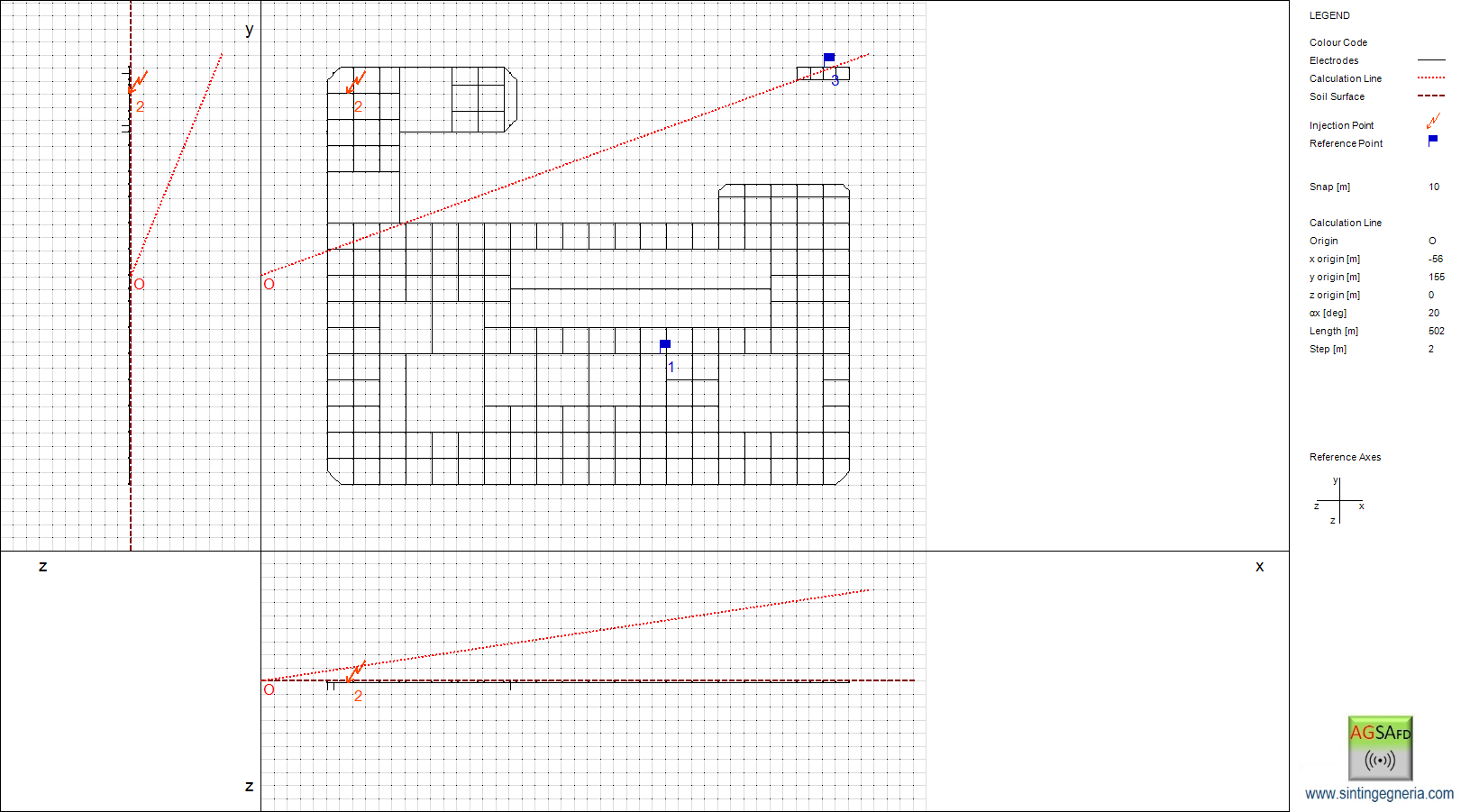
- Electric field calculation for AGSA_FD
- Enlarged limits for Volume Visualization
- Improved translation into German Language
- Implemented the possibility to export results in .csv format both for Magnetic Field and for Electric Field
- Some bugs fixed
09 March 2015
GSLab 6.0.1 Release
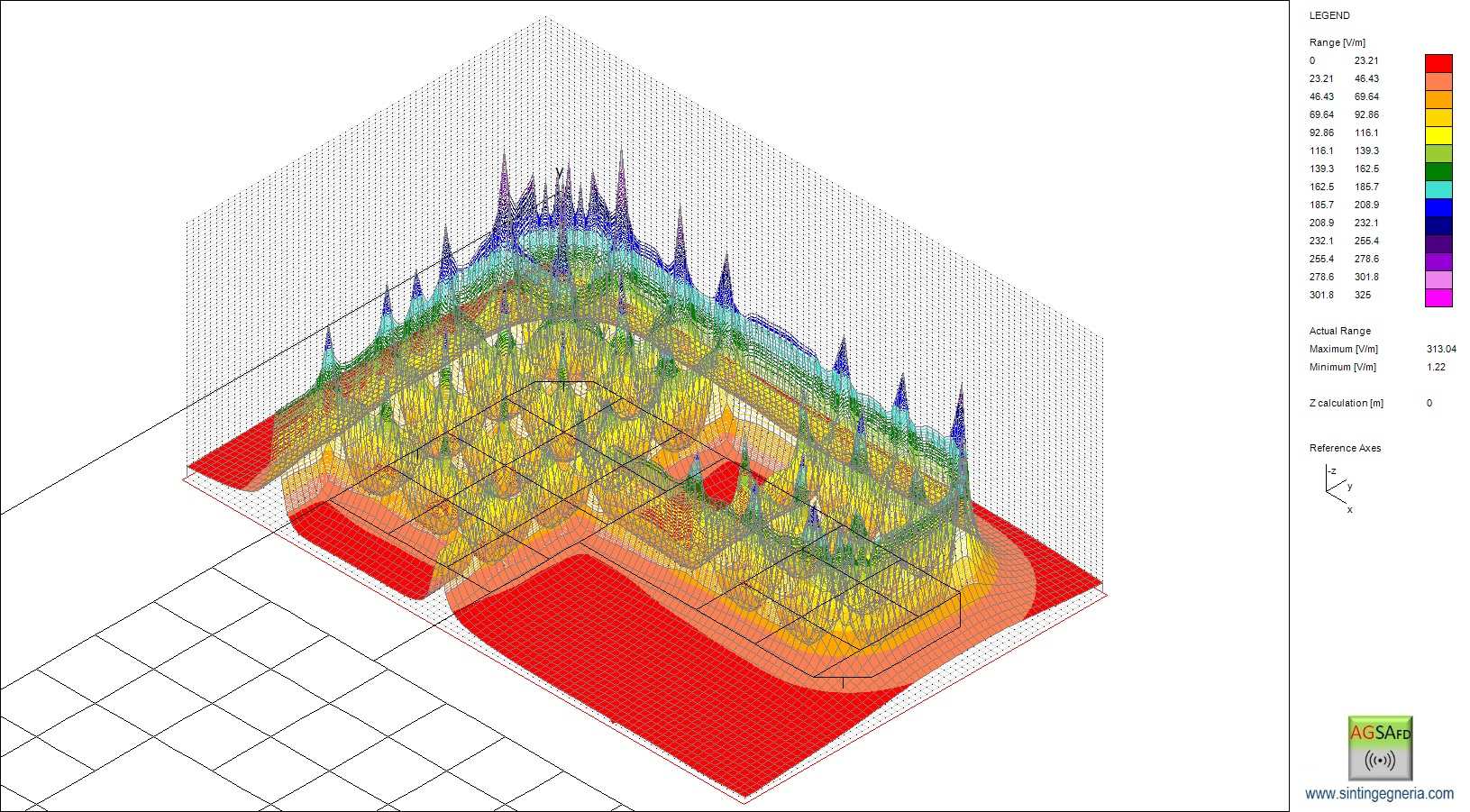
- New module AGSA_FD for interference and magnetic field calculation for systems both aerial and buried
- Great improvement of the stability of the software
- New distribution figures for Electromotive Force (GSA_FD and AGSA_FD)
- Input of arrays of horizontal spans implemented
- Faster “All Elements” picture generation (GSA_FD and AGSA_FD)
- Easier usage of “Covering Layer”: it can be input once the calculation is finished with no need to run the calculation again
- Some bugs fixed

07 January 2015
GSLab 5.0.5 Release
- New 1D representation of LCD, current and potential distributions
- Improved calculation stability
- Some bugs fixed

18 December 2014
GSLab 5.0.4 Release
- New area and line calculations available: Magnetic field on a flat surface (GSAFD)
- New 2D pictures for touch and step voltages (for both modules)
- Possibility to keep as reference all elements per touch voltages 2D pictures (GSAFD)
- A few bug fixed

10 November 2014
GSLab 5.0.3 Release
- Calculation Speed improvement.
- Possibility to create reference points in "Safe Area Graph".
- New Option: Accessible Soil Covering Layer also in Post Processing phase.
- Bugs Corrections.
13 October 2014
GSLab 5.0.2 Release
- 20 times faster than previous version.
- Possibility to save calculation. Avoid to recalculate.
- Touch Voltage Result new graphical result.
- Manual Updated.
- Bugs corrections.

19 September 2014
GSLab 5.0.1 First Release

Improved management of External Electromotive Forces
Page 2 of 3